
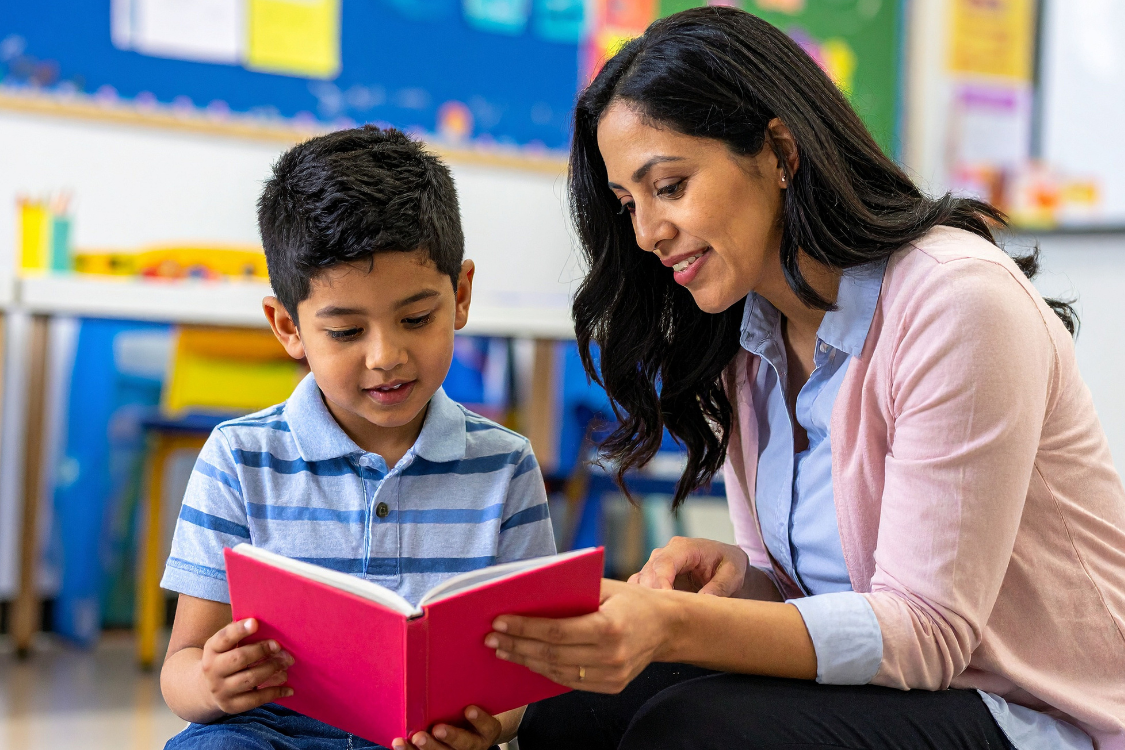

Your child has mastered decoding. They can sound out words and read sentences with growing confidence. But when you ask them what they just read, they struggle to explain how the ideas connect. This common challenge often points to a missing piece: understanding transition phrases.
What Are Paragraph Transition Phrases?
Transition phrases are the connecting words and phrases that link ideas within and between paragraphs. They’re like road signs that guide readers through the text, showing how thoughts relate to one another.
Common transition phrases include words like “first,” “next,” “however,” “because,” “in addition,” and “finally.” These small but powerful phrases signal relationships between ideas. Whether something happened in sequence, shows contrast, explains a cause, or adds information.
Think of transitions as the glue holding a story or explanation together. Without them, sentences feel choppy and disconnected. With them, text flows smoothly, and meaning becomes clear. For young readers developing comprehension skills, recognizing these phrases makes the difference between reading words and understanding messages.
When Children Are Ready to Learn Transitions
Transition phrases aren’t typically introduced during the earliest stages of reading instruction. Your child needs foundational skills first. They must develop phonemic awareness, learn phonics rules, and build basic decoding abilities before tackling the more complex work of understanding how ideas connect across sentences.
Most children encounter transition phrases naturally around second or third grade, during what reading researchers call the transitional reading stage. This is when kids move from “learning to read” toward “reading to learn.” They’re no longer focusing all their mental energy on sounding out individual words. They have enough fluency to start noticing how sentences work together.
Before formally teaching transition phrases, make sure your child can read grade-level texts with reasonable accuracy and speed. If they’re still struggling to decode words, their brain doesn’t have spare capacity to notice connecting phrases. Master the mechanics first. The comprehension strategies come next.
This sequential approach aligns with structured literacy principles. Reading skills build on each other. You can’t skip steps. A child who hasn’t developed fluent decoding will miss transition phrases entirely because they’re too busy figuring out each individual word.
How Transitions Support Reading Fluency and Comprehension
Reading fluency means more than speed. True fluency includes prosody. The rhythm, expression, and phrasing that make reading sound natural. Transition phrases play a crucial role in prosody because they signal to readers how ideas connect and where emphasis belongs.
When fluent readers see “however” at the start of a sentence, they automatically know a contrasting idea is coming. This knowledge affects their pacing and tone. They might pause slightly before the word or stress it to signal the shift. This natural expression shows they’re not just recognizing words but understanding relationships between thoughts.
Transition phrases also reduce cognitive load during reading. Once children recognize these phrases automatically, they free up mental resources for deeper comprehension. Instead of working hard to figure out how ideas relate, they can focus on what the text actually means.
Research from the National Reading Panel confirms that comprehension strategies, including understanding text structure and connections, significantly improve reading achievement. Transition phrases are essential tools for recognizing text structure. They show whether a passage explains a sequence of events, compares two things, describes cause and effect, or presents a problem and solution.
Teach Transition Phrases at Home
You can support your child’s understanding of transition phrases through everyday reading activities. The key is making these connecting words visible and explicit.
Start by pointing them out during read-aloud time. When you encounter words like “because,” “but,” or “then” in stories, pause briefly and explain what they signal. “See this word ‘because’? That tells us the author is about to explain why something happened.”
Create a transition phrase anchor chart together. List common transitions grouped by their purpose:
- Time order words (first, next, finally)
- Cause and effect words (because, so, therefore)
- Contrast words (but, however, although)
- Addition words (also, furthermore, in addition)
Keep this chart visible during reading practice.
Practice identifying transitions in your child’s decodable readers or early chapter books. After reading a page, ask your child to find connecting words. “Can you spot the word that tells us what happened next?” This active searching helps cement their understanding.
You can also play transition games during daily routines. When giving your child multi-step directions, emphasize transition words: “First, brush your teeth. Next, put on your pajamas. Finally, choose a bedtime story.” Ask them to repeat the directions using the same transition words.
Build Meaning Beyond Single Words
Understanding paragraph transitions represents an important milestone in reading development. It shows your child is ready to think beyond individual words and sentences. They’re beginning to see how authors construct meaning across larger chunks of text.
This skill becomes increasingly important as children encounter more complex reading material. Textbooks, articles, and longer stories all rely heavily on transition phrases to guide readers through information. Students who recognize these connectors navigate texts more successfully and retain information better.
The beautiful thing about transition phrases is that they appear everywhere: in stories, instruction manuals, recipes, and conversations. Once your child starts noticing them, they’ll see them constantly. This repeated exposure reinforces learning naturally.
Move Forward in Reading Development
Transition phrases are just one element of comprehensive reading instruction. They work best when children have already developed strong phonics skills, decoding abilities, and reading fluency. You can’t rush to comprehension strategies before building the foundation.
Ready to give your child systematic, research-based reading instruction that builds skills in the right order? Start your free 7-day trial of the Reading.com app and watch your child develop the complete skill set they need for reading success!