
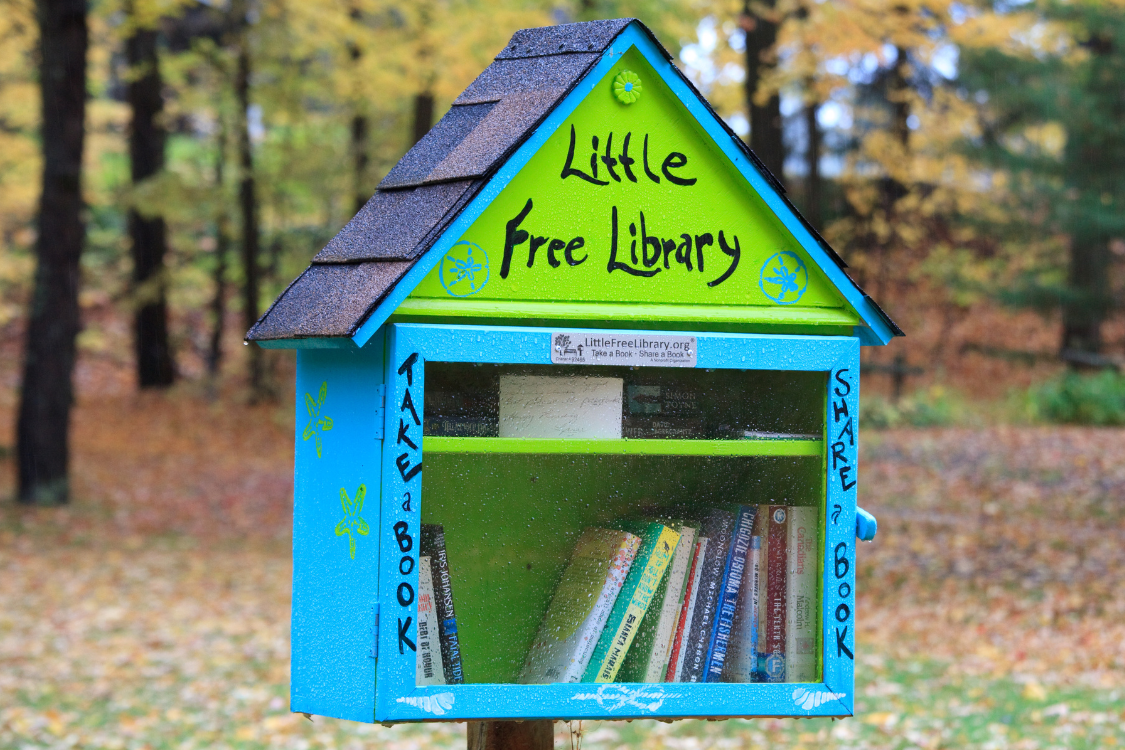

The next time you’re out for a walk with your child, keep an eye out for a small wooden box about the size of a birdhouse mounted on a post. Inside, you might find a treasure trove of books waiting to be discovered. Welcome to the world of Little Free Libraries. A grassroots movement that’s changing how communities share stories, one book at a time.
What Are Little Free Libraries?
Little Free Libraries are small, weatherproof boxes filled with books that operate on a simple principle: Take a book, share a book. These miniature libraries appear in front yards, parks, schools, and community centers across the globe. Anyone can take a book to read, and anyone can leave a book for others to enjoy.
The movement started in 2009 when Todd Bol of Hudson, Wisconsin, built a small model of a one-room schoolhouse as a tribute to his mother, a former teacher who loved reading. He filled it with books and mounted it on a post in his front yard. The idea caught on quickly. Today, more than 150,000 registered Little Free Libraries exist in over 115 countries. That’s millions of books being shared every single year.
Each library is unique. Some look like tiny houses with shingled roofs and painted trim. Others resemble whimsical castles, rocket ships, or miniature barns. The design doesn’t matter as much as the mission: connecting readers with books and building stronger communities through literacy.
How Little Free Libraries Work
The concept is beautifully simple. These book-sharing boxes have no library cards, no due dates, and no late fees. You don’t need to return the exact book you took. The system runs on trust and generosity.
When you find a Little Free Library, you can browse its selection. If you find something you want to read, take it home. Later, when you’re finished, you can return it to any Little Free Library or keep it and donate a different book instead. Many families make visiting local Little Free Libraries part of their regular routine, stopping by during neighborhood walks or bike rides.
The books inside change constantly. You might find picture books for toddlers sitting next to cookbooks, mystery novels, or science fiction. This variety exposes children to different genres and topics they might not encounter otherwise. It’s like a surprise every time you open the little door.
Benefits for Young Readers
Little Free Libraries offer special advantages for families with early readers. First, they make books accessible. Not every family lives near a public library or bookstore. A Little Free Library in your neighborhood means books are always within reach, no driving required.
Second, they remove barriers. There’s no pressure to finish books by a certain date or worry about damaging a borrowed book. Children can take their time with a book, reading it multiple times if they love it. This freedom helps build reading confidence.
Third, they encourage choice. When children pick their own books, they’re more invested in reading them. Little Free Libraries give kids agency in their reading journey. Your child might discover an author or series they never would have found at home.
These miniature libraries also teach community values. Children learn about sharing, generosity, and caring for common resources. When you donate books together, you’re showing your child how to contribute to something bigger than themselves.
Make Little Free Libraries Part of Your Reading Routine
You can incorporate Little Free Libraries into your family’s literacy activities in several meaningful ways.
Start by mapping out the libraries in your area using the official Little Free Library world map at littlefreelibrary.org. Turn visiting them into an adventure. Walk or bike to different locations. Let your child check each library and choose a book.
Before visiting, help your child select books from home to donate. Talk about which books might make another child happy. This practice reinforces the sharing aspect and prevents your home from overflowing with books.
Make it a game. Challenge your child to find a book that starts with the first letter of their name. Or look for books about specific topics you’re studying together, animals, weather, or community helpers.
Consider starting your own Little Free Library if you have the space. Building or decorating one together is a wonderful family project. Your child can help stock it, maintain it, and meet neighbors who stop by. Being a library steward teaches responsibility and pride in community service.
Build Reading Skills Through Book Exploration
The variety of books in Little Free Libraries naturally supports different aspects of reading development. When your child browses titles independently, they practice print awareness by looking at covers and titles. Flipping through pages helps them understand how books work.
Selecting books based on interest builds motivation, one of the strongest predictors of reading success. When children want to read something, they stick with it longer and try harder to decode unfamiliar words.
The random nature of Little Free Library collections also means your child might pick up books slightly above or below their current reading level. Both scenarios have value. Easier books build fluency and confidence. Challenging books stretch vocabulary when you read them together.
Don’t worry if your child gravitates toward the same types of books repeatedly. Repeated reading of familiar material actually supports literacy development. Kids learn through repetition. If they want to check out another princess story or dinosaur book, that’s perfect.
Start Your Little Free Library Adventure Today
Little Free Libraries prove that literacy doesn’t require expensive programs or complicated systems. Sometimes all you need is a box of books and a generous spirit.
These charming libraries make reading accessible, fun, and community-centered. They turn ordinary walks into reading adventures and teach children that books are meant to be shared and loved.
While exploring Little Free Libraries with your child, remember that finding books is just the beginning. Your child still needs systematic reading instruction to decode those words independently. That’s where structured learning makes all the difference.
Ready to help your child become a confident reader? Start your free 7-day trial of the Reading.com app and give your child the phonics foundation they need to enjoy every book they discover!